-
Hello world!
The Frank harmonica microphones are proudly “Made in the Motor City”, asssembled from domestic and imported components in suburban Detroit.
A Classic Updated for the 21st Century
“Sounds good. Looks good.” John Kally
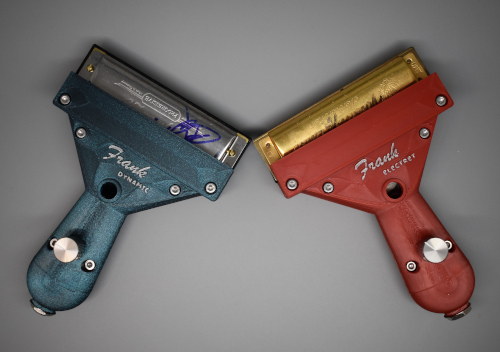
The Electric Harmonica Company is pleased to announce the “Frank” harmonica microphone, an updated take on a classic design.
Frank Strnad was an engineer and a member of a harmonica trio with his brothers and he invented what is likely the first microphone specifically designed to work with a harmonica, which he named after himself, the Strnad. American Designs Inc., Frank’s company, produced the Strnad mic in Flint, Michigan for decades and over the years, the Strnad microphone gained a loyal following. The design is a harmonica classic, and with good reason, it’s practical and sounds good. Frank Strnad passed away on New Year’s Day 2012 and ADI went out of business. These days, if you want a Strnad, you’re likely going to have to buy one used on eBay or Reverb.
The Electric Harmonica Company is happy to announce that we’ve updated Frank Strnad’s classic design while preserving those features that harmonica players have valued for decades. The sound is funneled to the microphone element inside the housing. That reduces acoustic feedback and balances the sound of the reeds. The Strnad also allows you to play without having to cup a microphone in your hand with the harmonica since the harp is secured in the microphone. A port in the top allows you to do wah effects with your finger. The Strnad has also been very popular with harmonica players who use a rack and want to play amplified.
We’ve kept all of that with the new “Frank” harmonica microphones, but made some updates for the 21st century.
We’ve replaced the Strnad’s permanently attached cable with a high-quality, assured connection PureTone multi-contact 1/4″ jack, so you can choose whatever cable length that you think works best with your tone (the longer a cable is, the more capcitance it has, which filters out high frequencies – part of Jimi Hendrix’s tone was that long coiled cable he used).
The original Strnad was assembled with exposed hardware. The Frank is held together recessed and embedded fasteners.
The original Strnad mics that came equipped with a volume control have it mounted at the back of the housing. We’ve moved it to the top of the housing, where it’s at your fingertips, so you don’t have to use two hands to adjust the volume. Some players, though, may prefer playing with the volume control on the bottom. Since the Frank is pretty much symmetrical, that’s no problem.
Perhaps most importantly, we’ve made the Frank mic compatible with a wider range of harmonica brands and models than the Strnad could accommodate. The original was pretty much designed around vintage Hohner harmonicas, likely Marine Bands. The rolled front lips of the harmonica’s coverplates slide sideways into grooves in the front of the microphone. While that works well enough for Marine Band, not all brands and models of harmonicas have the same dimensions, not even Hohners. With some brands, it’s too loose of a fit to work well and with other brands it either won’t fit or is so large that it puts a strain on the housing. The hard plastic of the housing can also scratch your harmonicas.
Instead of hard plastic grooves, the Frank mics use closed-cell foam retainers. You mount the harmonica as with the original, you slide the harmonica sideways into the Frank, but the foam will accommodate a much wider variety of brands and models of harmonicas, from a 19mm (~3/4″) tall Hohner Marine Band to the 21mm (~7/8″) tall Pro Harp, including most popular diatonic harmonicas from Lee Oskar, Suzuki, Seydel, and other brands. It also makes a more airtight seal on the harmonica, for improved tone and further reduced feedback.
We use a high impedence dynamic element so the Frank will work with conventional guitar and harmonica amplifiers without needing a matching transformer.
Additionally, we’ve given Frank some visual pop. Being located in Flint, a car-making town, I’m sure that Mr. Strnad heard a quote attributed to Henry Ford, “You can have any color you want, as long as it’s black.” Almost all Strnad mics were black. Since we’re 3D printing the Frank, you can have it in standard black or your choice of premium colors for a slight additional fee.
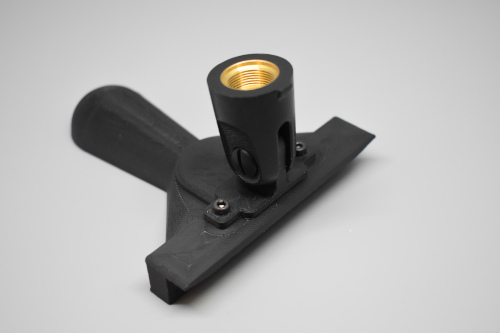
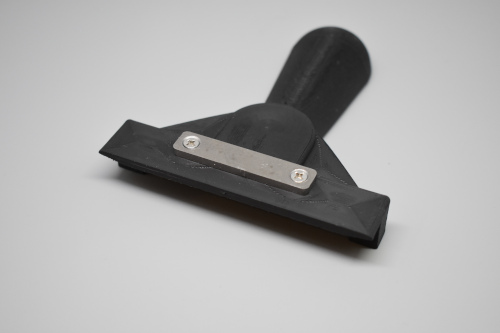
The Frank harmonica microphones are compatible with a variety of racks and adapters are available to work with magnetic racks like the Seydel Gecko, or to mount on a microphone stand.
The Frank harmonica microphones are proudly “Made in the Motor City”, asssembled from domestic and imported components in suburban Detroit.
Why call it Frank? Obviously to honor Frank Strnad and his classic design but also, ahem, frankly, we figure that if Frank can sell a harmonica microphone called the Strnad, and be successful with a name like that, we can make a Strnad-type mic and call it Frank.
Finally, we’re pricing the Frank at a very reasonable $95, plus shipping and handling. To be honest, the components are not very expensive and we’re selling direct so there’s no need to charge a lot more. They are also being made-to-order, so we don’t have a lot of money tied up in inventory.
The Frank Mic will fit in most spring loaded harmonica racks. In addition we are offering adapters for both microphone stands and magnetic harmonica racks.
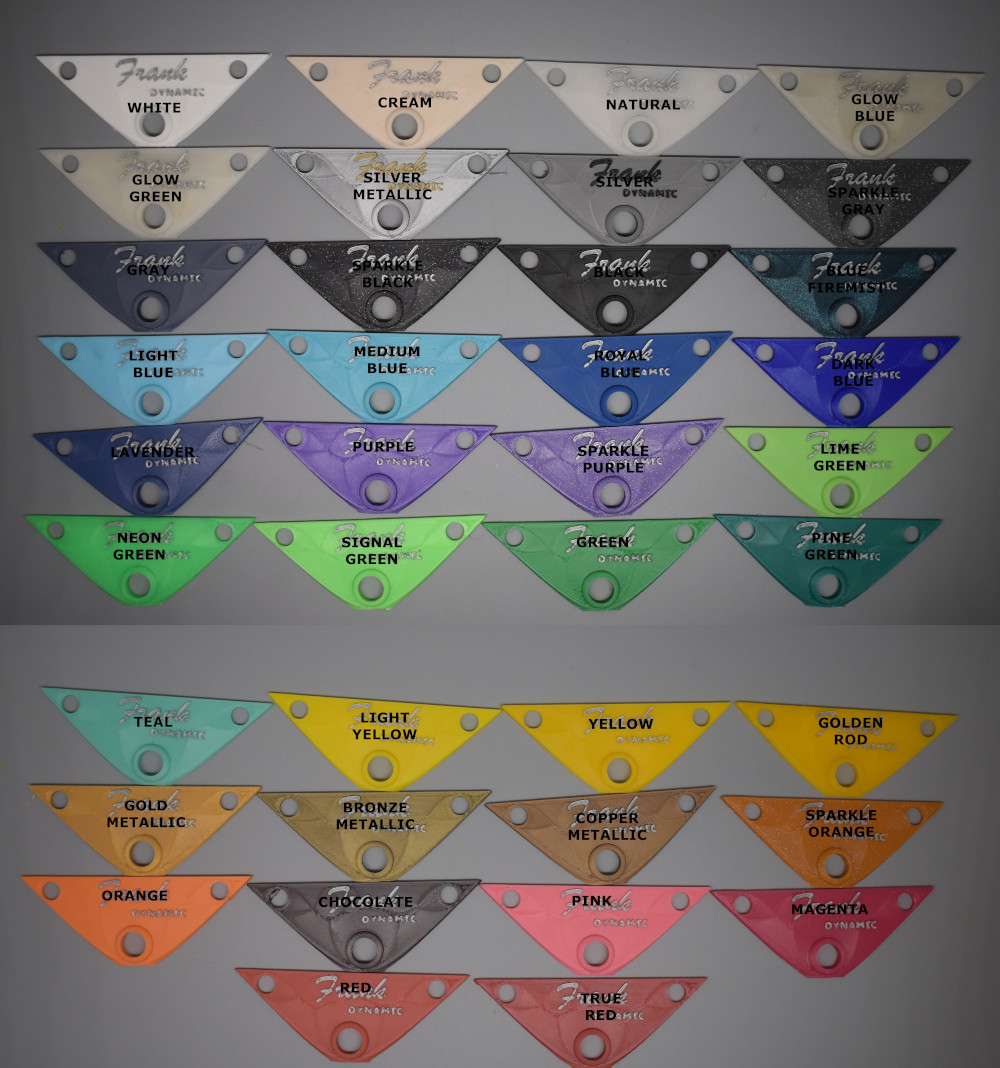
Additionally, we’ve given Frank some visual pop. Being located in Flint, a car-making town, I’m sure that Mr. Strnad heard a quote attributed to Henry Ford, “You can have any color you want, as long as it’s black.” I’ve never seen a Strnad that wasn’t black. Since we’re 3D printing the Frank, you can have it in a wide variety of colors.
The Frank harmonica microphones are proudly “Made in the Motor City”, asssembled from domestic and imported components in suburban Detroit.